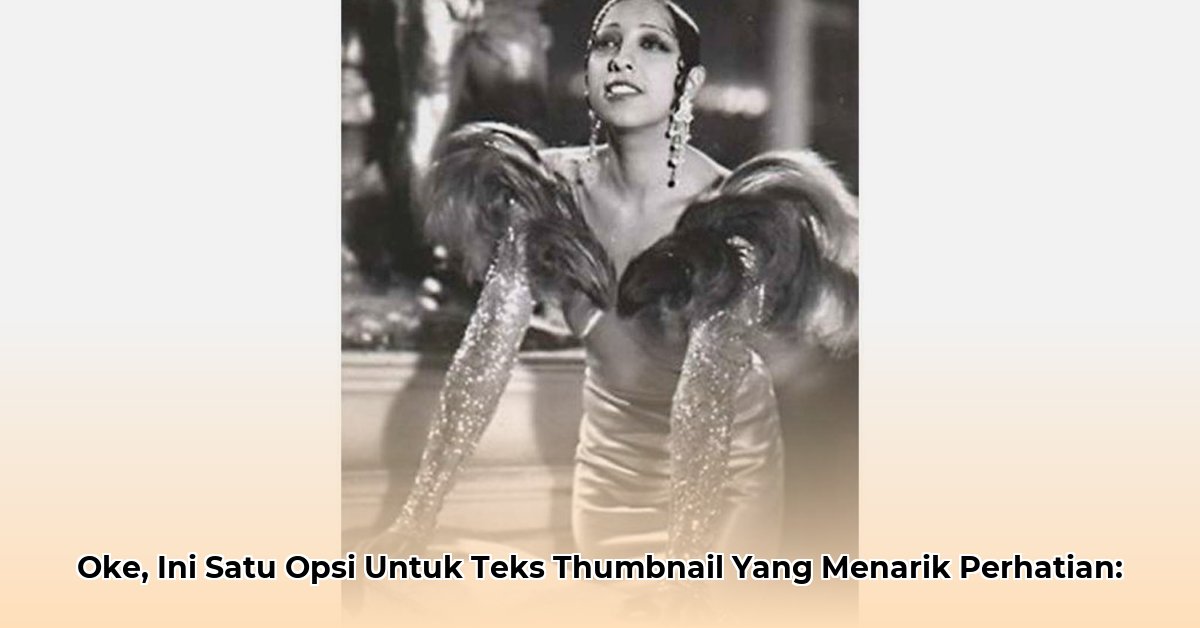
Uncover Josephine Baker Net Worth: From Poverty to Parisian Icon & Civil Rights Hero
August 26, 2025 · 6 min · 1242 words · Heather Scott
# Uncover Josephine Baker Net Worth: From Poverty to Parisian Icon & Civil Rights Hero

Josephine Baker wasn't just a dancer; she was a global icon. She transformed herself from a young girl born into poverty into a Parisian superstar, a war hero, and a civil rights activist. But what about her finances? How did she accumulate her wealth, and what impact did her life choices have on her financial standing? This article delves into Josephine Baker's remarkable journey, exploring her wealth, her challenges, and her lasting legacy.

## Early Life, Parisian Fame, and Forging a Career

Born Freda Josephine McDonald in St. Louis, Missouri, in 1906, Baker's early life was marked by poverty and hardship. These experiences, however, shaped her into the determined and resilient woman she became. Her career began on the vaudeville stage, eventually leading her to the vibrant artistic scene of Harlem during the Harlem Renaissance. In 1925, she journeyed to Paris; a move that would catapult her to international fame. How did this early life shape her later achievements and her approach to wealth?

### International Icon and the Accumulation of Wealth
Like other icons featured [here](https://icpooch-shark-tank-net-worth.pages.dev), Baker's story is one of immense success. Paris embraced Josephine Baker, and she quickly became a sensation with her performances in "La Revue Nègre" at the Théâtre des Champs-Élysées. Her "Danse Sauvage," complete with the iconic banana skirt, cemented her status as a cultural icon. This fame led to lucrative endorsements, high-profile performances, and various business opportunities, laying the foundation for her considerable wealth. Her success story highlights a critical question: How did the racial barriers she faced in the U.S. influence her decision to build her career in Europe?

### Wartime Service and the Fight for Justice

Josephine Baker's commitment to France went far beyond the stage. During World War II, she served in the French Resistance, risking her life to transport messages and provide shelter. This act of bravery was not driven by financial gain, but by her deep sense of justice and loyalty. She later became a dedicated civil rights activist, participating in protests and refusing to perform in segregated venues. She used her resources to support her beliefs. What motivated Baker to risk everything for her values?

### The Rainbow Tribe and Social Causes

Baker is also well-known for forming the "Rainbow Tribe," by adopting 12 children from diverse backgrounds. She wanted to create a living example of multicultural harmony. This ambitious project demonstrates her commitment to social change, it also undoubtedly had a significant impact on her financial resources. This shows how personal ideals can influence a person's wealth. How sustainable was this commitment in the long run, considering her financial challenges later in life?

### Estimated Net Worth and Her Impact

Estimating Josephine Baker's net worth is a complex task due to limited financial records and the fluctuations in her income and expenses throughout her career. While precise figures are difficult to ascertain, it's believed that her wealth peaked during her most successful years in Paris, potentially reaching millions of dollars. However, she faced financial difficulties later in life. She invested heavily in her estate, Les Milandes, which proved to be an unsustainable venture. Despite these financial challenges, Baker's legacy extends far beyond monetary wealth.

Here's a summary of Josephine Baker's key financial and life choices:

*   Early Success: She maximized her earnings through performances, endorsements, and wise investments.
*   Activism: Her commitment to civil rights and wartime service led her to prioritize social causes over personal wealth.
*   Family: Her "Rainbow Tribe" was a costly endeavor, but it reflected her values.

"Josephine Baker's true wealth was not measured in dollars and cents, but in her courage, her talent, and her unwavering commitment to equality and social justice," said [Dr. Annette Joseph-Gabriel, Professor of French and African American Studies] at [University of Michigan].

### Building a Legacy of Humanitarian Efforts

Josephine Baker's story serves as an inspiration. What can we learn from her life about the relationship between wealth, values, and social impact? Her legacy endures not because of her financial status, but because of her courage, her talent, and her unwavering commitment to making the world a better place.

Key Facts:
   - Highest paid entertainer in Europe.
   - She used her success to move freely and gather intelligence during WWII.
   - Adopted twelve children from diverse backgrounds, creating her famous "Rainbow Tribe."

## How Josephine Baker Aided the Resistance

Key Takeaways:

*   Josephine Baker rose from poverty to become Europe's highest-paid entertainer.
*   She leveraged her fame into substantial earnings through various ventures.
*   Her lavish lifestyle and philanthropy contributed to later financial difficulties.
*   Despite financial challenges, Baker's cultural and social impact endures.
*   She was honored posthumously by France for her wartime service.

### From St. Louis to Stardom: A Parisian Icon

Josephine Baker's story is a true Cinderella story. Born Freda Josephine McDonald in St. Louis in 1906, she danced her way out of poverty and right into the heart of Europe. Sensing opportunity amidst the racial barriers of the United States, she crossed the Atlantic in 1925.

France embraced her, and she quickly became a sensation. Can you imagine the thrill of seeing her iconic "banana skirt" dance at the Folies Bergère? It wasn't just entertainment; it was a statement.

### Building a Fortune: Beyond the Stage

By the late 1920s, Josephine Baker wasn't just a star; she was a financial powerhouse. She became the highest-paid entertainer in Europe. We are talking about serious money! How did she do it? It wasn't just about performances. She capitalized on her fame and invested heavily in merchandise, music, and film roles. One source, *The New LaVilla*, suggests her personal wealth exceeded one million dollars. She bought real estate, and *Les Milandes* became her home and a symbol of her success.

### Wartime Heroics: Beyond the Stage

But her life wasn't just about glamour and entertainment. How did Baker aid resistance? During World War II, Josephine Baker put her fame and fortune on the line. She joined the French Resistance, using her celebrity status to move freely and gather intelligence. Baker smuggled messages written in invisible ink on her sheet music. She hid refugees. All of this shows a deep commitment to justice.

### Civil Rights Champion and "Rainbow Tribe"

Josephine Baker's commitment to equality didn't stop with the war. She became a prominent civil rights activist, even speaking at the March on Washington in 1963. Baker adopted twelve children from diverse backgrounds, creating her famous "Rainbow Tribe." They were a symbol of unity and tolerance.

### Financial Struggles and a Lasting Legacy

Despite her success, Baker's lavish lifestyle and generous spirit eventually caught up with her. Maintaining *Les Milandes* and providing for her large family became unsustainable. Sadly, by the late 1960s, she faced financial ruin. In 1968, she lost *Les Milandes*. Princess Grace of Monaco stepped in to help, providing her with an apartment, but the financial strain was evident. She made a comeback in 1975, celebrating 50 years in entertainment at the Bobino Theatre, but she passed shortly afterward with hardly any reserves.

Josephine Baker's story isn't just about wealth; it's about resilience, courage, and a deep commitment to making the world a better place. She left an impact on the world. France recognized her contributions by posthumously inducting her into the Panthéon, their highest honor. She left behind little money, but a legacy that continues to inspire. [Citation](https://www.thenewlavilla.com/post/lost-fortunes-wealthy-black-women-who-built-empires-before-the-civil-rights-act-and-where-their-wealth-went)